Closet Detox

Declutter your way to a wardrobe you love

The Closet Detox: How to Declutter and Love Your Wardrobe Again

2026-07-11

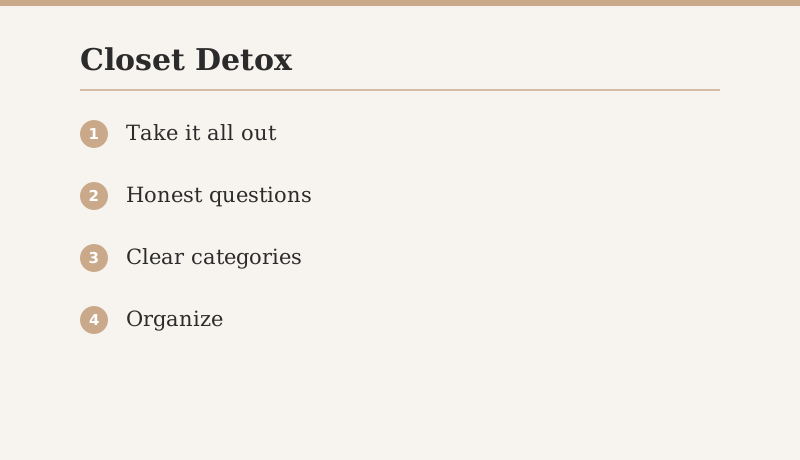
Quick Answer: To declutter your closet for good, take everything out first, sort each piece with honest questions (fit, feel, worn-this-year), split it into keep/donate/repair/maybe piles, and then organize what’s left by category or color. The whole process usually takes an afternoon, and it’s the “everything out” step most people skip that makes the biggest difference.

You know the feeling: a closet stuffed to the rod, and you’re still standing there at 7am thinking you have nothing to wear. That’s not a shopping problem — it’s a sorting problem, and it’s fixable in one focused session.

Why does a closet detox start with taking everything out?

The Closet Detox: How to Declutter and Love Your Wardrobe Again

It feels counterintuitive to make a bigger mess before you make things better, but a quick tidy — pushing hangers around, pulling a few obvious rejects — never actually resets anything. Emptying the closet completely forces honest decisions, because you can’t “forget” about a piece when it’s sitting in a pile on your bed. This step alone usually turns up items you forgot you owned and duplicates you didn’t realize you’d bought twice (we’ve all bought the same black tank top three times — no judgment).

Styling flat lay

What questions should you ask about each piece of clothing?

Pick up each item and ask, in order:

  1. Does it actually fit — right now, not “when I lose 5 pounds”?
  2. Do I feel good in it the moment I put it on?
  3. Have I worn it in the past year?
  4. Would I buy it again today, at full price?

Be ruthless here — this is the step that separates a real detox from a five-minute reshuffle. If a piece doesn’t earn a confident yes on at least two or three of those, it’s taking up hanger space that a piece you actually love could fill instead.

Point detail

How should you sort everything once you’ve decided?

Split your clothes into four clear piles:

  • Keep — passed the honest-question test.
  • Donate — good condition, just not for you anymore.
  • Repair — worth mending (missing button, loose hem), but only if you’ll actually take it to get fixed within the next month or two.
  • Maybe — genuine uncertainty. Box it, date it, and revisit in 30-60 days with fresh eyes.

The “maybe” pile is the one people cheat on the most — either dumping everything into it to avoid deciding, or skipping it entirely. Keep it small and actually revisit it; that’s the whole point.

How do you organize what’s left so it actually stays tidy?

Style guide

Once you’ve pared down, organize thoughtfully by category (tops, bottoms, dresses), by color, or by how you get dressed (workwear together, weekend clothes together) — whichever system matches how your brain actually works. A well-organized closet where you can see everything at a glance makes getting dressed faster and helps you rediscover pieces you’d otherwise forget you own. The detox isn’t finished until this step is done; a decluttered pile that gets shoved back in randomly just becomes next year’s mess.

5 Mistakes Everyone Makes During a Closet Detox

  1. Doing it in 20 minutes. A real detox takes a couple of hours minimum — rushing it means you fall back on “I might need this someday” for everything.
  2. Skipping the “everything out” step. Sorting in place lets your brain skim past things instead of truly evaluating them.
  3. Making the maybe pile too big. If more than 20% of your closet lands in maybe, you’re avoiding decisions, not making them.
  4. Not setting a revisit date for the maybe pile. Without a deadline, that pile just becomes permanent storage.
  5. Reorganizing before you declutter. Buying bins and matching hangers first is fun, but it’s putting effort into organizing clothes you’re about to donate anyway — declutter first, organize second (this one trips up more people than you’d expect).

FAQ

How often should you declutter your closet?

Most people find a full detox once or twice a year keeps things manageable, with a quick 10-minute check-in each season as you swap clothes in and out. If your closet feels chaotic more often than that, it’s worth checking whether new items are coming in faster than old ones are leaving.

What should you do with the “maybe” pile?

Box it up, write the date on it, and set a reminder to revisit it in a month or two. If you haven’t reached for anything in the box by then, that’s usually your answer — it can move to the donate pile with a clear conscience.

Is it worth repairing clothes instead of donating them?

Yes, if it’s a quick fix (button, hem, small tear) on a piece you genuinely love and wear — repairing is often cheaper and more sustainable than replacing. But be honest about whether you’ll actually get it repaired; if it’s been sitting in a “to fix” pile for over a year, it’s fair to just let it go.

TL;DR:

  • Empty your closet completely first — sorting in place doesn’t force honest decisions.
  • Ask four questions per piece: does it fit, do you feel good in it, have you worn it this year, would you buy it again today.
  • Sort into keep, donate, repair, and a small, dated “maybe” pile.
  • Organize what remains by category, color, or routine so you can see everything at a glance.
  • Declutter before you reorganize — matching bins won’t fix a closet that’s still full of clothes you don’t wear.

Keep Reading

This article is for general styling and informational purposes only. Trends, sizing, availability and pricing may vary by brand and season.

← All articles