Why the One-In-One-Out Rule Fails Without a Specific Category Match
The one-in-one-out rule sounds like a clean, simple wardrobe control system, but without one specific requirement, matching category, it quietly stops working and closets grow anyway, just more slowly.

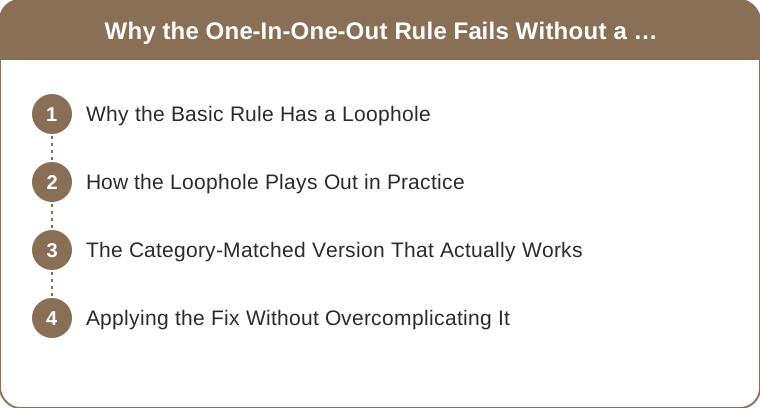
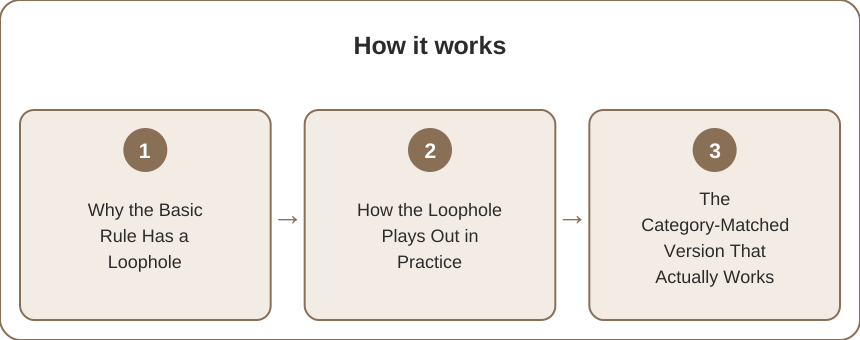
Why the Basic Rule Has a Loophole
The gap: the standard one-in-one-out rule only requiring one item removed per item added, with no requirement that the removed item match the category of what came in, which leaves plenty of room for imbalance to build up slowly.
How the Loophole Plays Out in Practice
The pattern: someone buying five new tops in a month and removing five old, rarely-worn pants to satisfy the rule technically, while tops accumulate unchecked and pants get depleted, an outcome the rule as commonly stated doesn’t actually prevent.

The Category-Matched Version That Actually Works
The fix: requiring the removed item to come from the same general category as the item purchased, a new top requiring an old top’s removal specifically, which keeps each category’s total count genuinely stable rather than just the closet’s overall item count.
Applying the Fix Without Overcomplicating It
The practical version: grouping a wardrobe into just four or five broad categories, tops, bottoms, outerwear, shoes, dresses, rather than dozens of narrow ones, keeping the category-matched rule simple enough to actually follow consistently, and the frame (one-in-one-out only prevents wardrobe growth when the removed item matches the category of what’s added — without that match, individual categories can still balloon even while the rule is technically being followed.)
The one-in-one-out rule sounds like a clean, simple system for controlling wardrobe size, but the standard version only requires one item removed per item added, with no requirement that the removed item match the category of what came in, which leaves plenty of room for imbalance to build up slowly. Someone buying five new tops in a month and removing five old, rarely-worn pants technically satisfies the rule while tops accumulate unchecked and pants get depleted, an outcome the rule as commonly stated doesn’t actually prevent. Requiring the removed item to come from the same general category as the new purchase, a new top requiring an old top’s removal specifically, keeps each category’s total count genuinely stable rather than just the closet’s overall item count, and grouping a wardrobe into just four or five broad categories rather than dozens of narrow ones keeps that category-matched version simple enough to actually follow long term.
Keep Reading
This article is for general styling and informational purposes only. Trends, sizing, availability and pricing may vary by brand and season.